Is It Time for a Cochlear Implant? Signs Your Hearing Aids Are No Longer Enough
Knowing when hearing aids have stopped being enough isn’t always…
Read more
When Hearing Aids Stop Working, There’s Still a Way Back to Sound
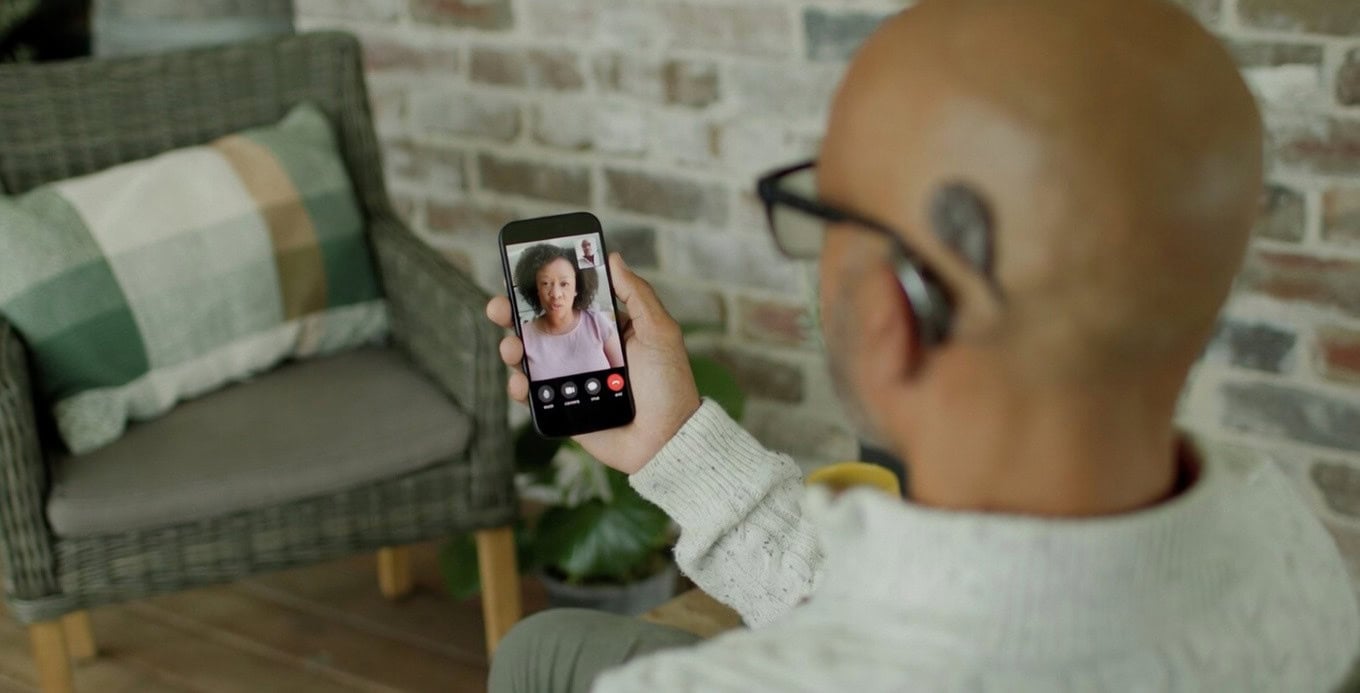
Severe hearing loss doesn’t have to mean a life cut off from the people and moments that matter. Precision Hearing’s experienced audiologists / audiometrists guide you through every step of the cochlear implant journey, from candidacy assessment to lifetime programming support, without ever leaving you to figure it out alone. We work with all major cochlear implant manufacturers: Cochlear, Med-EL, and Advanced Bionics.



What Is a Cochlear Implant?
It bypasses the damaged part of the ear and goes straight to the nerve.
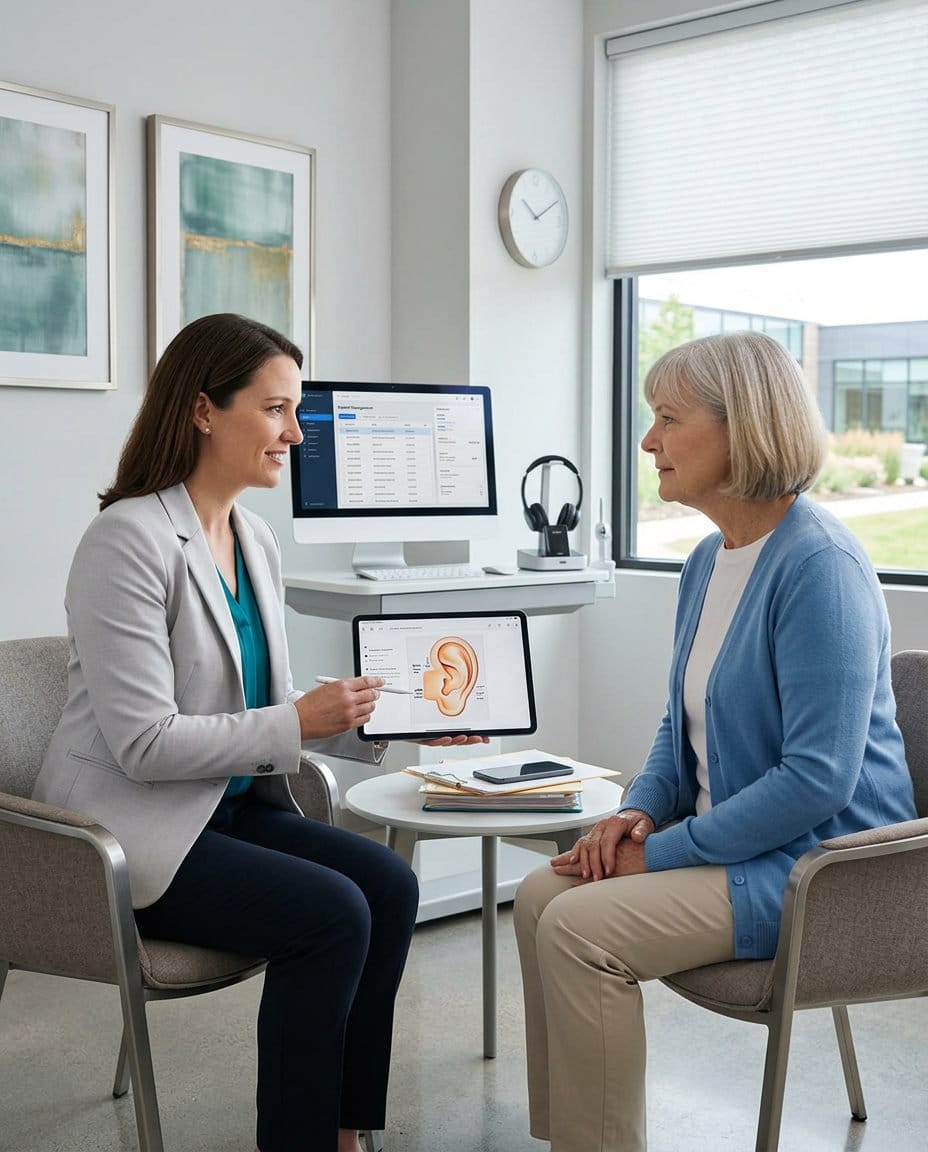
A cochlear implant is a surgically implanted electronic device that bypasses damaged parts of the inner ear and directly stimulates the auditory nerve. Unlike hearing aids, which amplify sound, a cochlear implant creates a sense of sound where amplification alone can no longer help enough.
It has two parts: an internal implant inserted by an ENT surgeon, and an external processor worn behind the ear. Once activated, the processor captures sound and sends it to the implant, which translates it into signals your brain learns to recognise as speech and sound. Results take time and commitment — regular programming sessions and auditory practice are essential. But for the right candidate, the outcomes can be life-changing.
Megan had been a Precision Hearing patient for years, successfully managing her hearing loss with hearing aids. But when she returned after a gap, her audiologist noticed something had shifted. She was struggling significantly, relying on visual cues just to follow basic conversation. Rather than simply fitting new hearing aids, her audiologist recognised the signs. A comprehensive cochlear implant candidacy assessment confirmed it: Megan was an ideal candidate.
I could hear the key changes. I just cried.
Megan, Precision Hearing Patient
On activation day, she went home and sat at her piano, an instrument she hadn't been able to truly hear for years. This is what the right care, at the right time, can do.

Why Patients Choose Precision Hearing for Cochlear Implant Care
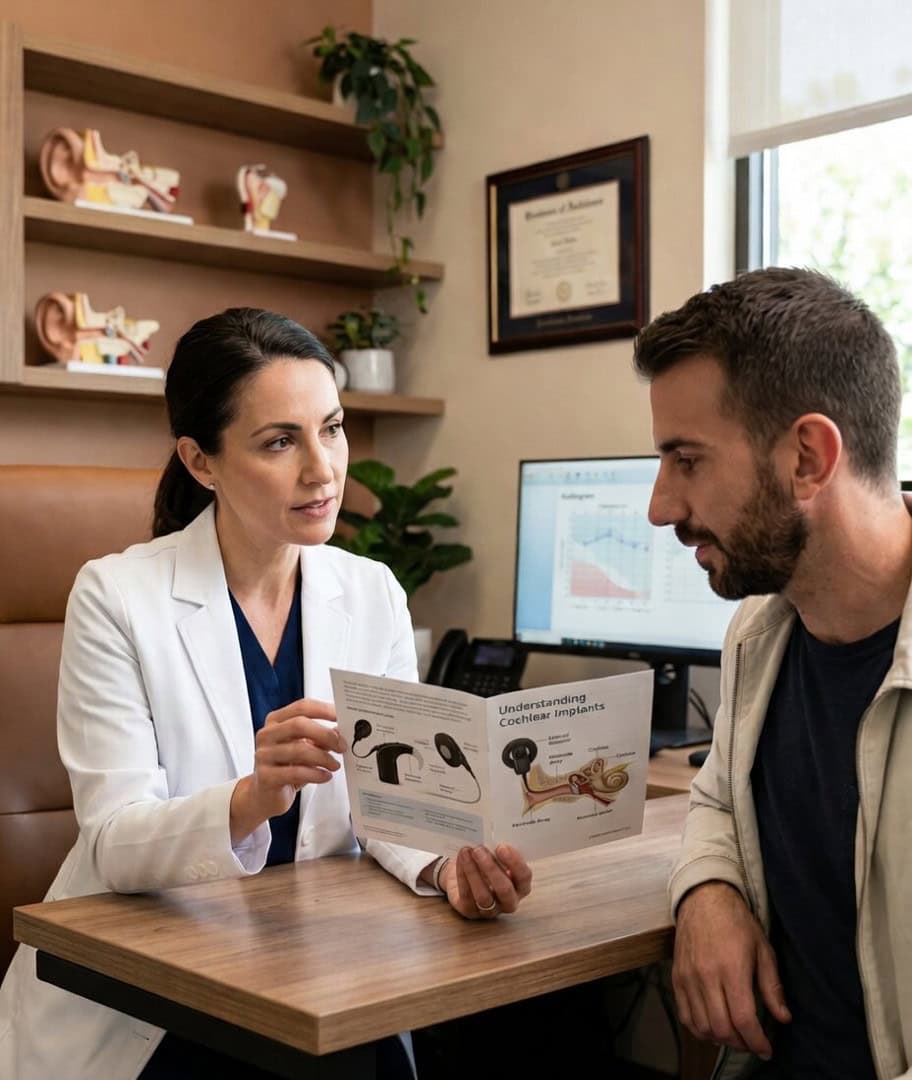
Not every hearing loss is the same, and a cochlear implant isn't appropriate for everyone. Our thorough candidacy evaluation determines whether you're a suitable candidate, with an honest conversation about realistic outcomes for your specific situation. ($315, Medicare rebate available.)
Cochlear implant programming isn't a one-time event. Your device needs regular mapping and optimisation as your brain adapts to new sound input. All ongoing programming is included as part of your care, bulk billed post-surgery. No surprise costs, no per-session charges, no ceiling on support.
Our audiologists / audiometrists programme cochlear implants across all major brands: Cochlear, Med-EL, and Advanced Bionics. Whether you're new to implants or transferring your care from another clinic, you're never told your device isn't compatible. Remote programming is also available for adjustments between in-person appointments.
We will never recommend a cochlear implant unless it is clinically appropriate for you. If hearing aids can still help, we'll say so honestly. If you need an ENT referral, we'll arrange it. We also host Discovery Hearing Implants events several times a year, where you can hear directly from cochlear implant recipients and ask questions in a relaxed environment. Your trust matters more to us than any sales outcome.
The difference is genuine care, not a commission.
Family-owned. Clinically led.
What the Cochlear Implant Journey Looks Like
Every journey is individual, but this is the typical path from first appointment to long-term support.
A thorough evaluation to determine whether a cochlear implant is clinically appropriate for your degree and type of hearing loss. We discuss expected outcomes and limitations honestly.
If you're a suitable candidate, we refer you to an ENT surgeon for consultation and surgery. The internal implant is inserted under general anaesthetic.
Approximately 4 weeks after surgery, your device is activated and your audiologist / audiometrist begins the first mapping session. This is when you hear sound for the first time through your implant.
Regular appointments over the following months fine-tune your programming as your brain adapts. Auditory practice at home is an important part of achieving the best outcomes.
Annual reviews, troubleshooting, and ongoing programming adjustments — all bulk billed for life. Remote programming is available for adjustments between in-person visits. We don't disappear after activation.
Book a Cochlear Implant Assessment
The first step is a candidacy assessment: a thorough, honest evaluation with no pressure and no predetermined outcome.
Frequently asked questions
There’s no upper age limit. We’ve successfully fitted patients in their 80s and 90s. What matters is your hearing loss severity, your overall health for surgery, and your motivation to work through the rehabilitation process. Your candidacy assessment will determine eligibility regardless of age.
Common signs include: struggling to understand speech even in quiet environments despite well-fitted aids, relying heavily on lipreading, and finding phone conversations extremely difficult even with phone-compatible aids. The candidacy assessment includes aided speech testing that measures your benefit objectively against clinical thresholds. See our guide: How to Tell When Hearing Aids Are No Longer Enough.
Yes. The cochlear implant has two parts: an internal implant (inserted surgically, invisible externally) and an external processor worn behind the ear, similar in size to a behind-the-ear hearing aid. You remove the external processor when sleeping or showering, but when it’s off, you can’t hear through that ear. Modern processors come in a range of colours and are worn comfortably by patients of all ages.
It varies significantly. Many recipients notice steady improvement within 1 to 3 months; by 6 to 12 months, most can follow conversation in quiet environments. Results depend on how long you had severe hearing loss before implantation, prior hearing aid experience, and your commitment to auditory practice. We support you through the entire process with regular programming. See our guide: A Realistic Cochlear Implant Timeline.
Yes. We program cochlear implants from Cochlear, Med-EL, and Advanced Bionics regardless of where your surgery was performed or who activated your device. We’ll request your previous program settings to ensure continuity of care, then take over all ongoing programming and support, bulk billed with a GP referral.
Ask us about our buddy program — we can connect you with a current cochlear implant recipient who can share their real-world experience.
Ask us
Ready to find out if a Cochlear Implant is rght for you?
The first step is a candidacy assessment: a thorough, honest evaluation with no pressure and no predetermined outcome. If a cochlear implant isn’t the right answer for you, we’ll tell you, and we’ll talk through what else might help.
In-Depth Guides on Cochlear Implants, Costs and Care
Knowing when hearing aids have stopped being enough isn’t always…
Read moreWhen you’re considering a cochlear implant, one of the first…
Read more
Cost is one of the first questions people ask about…
Read more
One of the most important things to understand before receiving…
Read more
A common assumption about cochlear implants is that once you…
Read more